
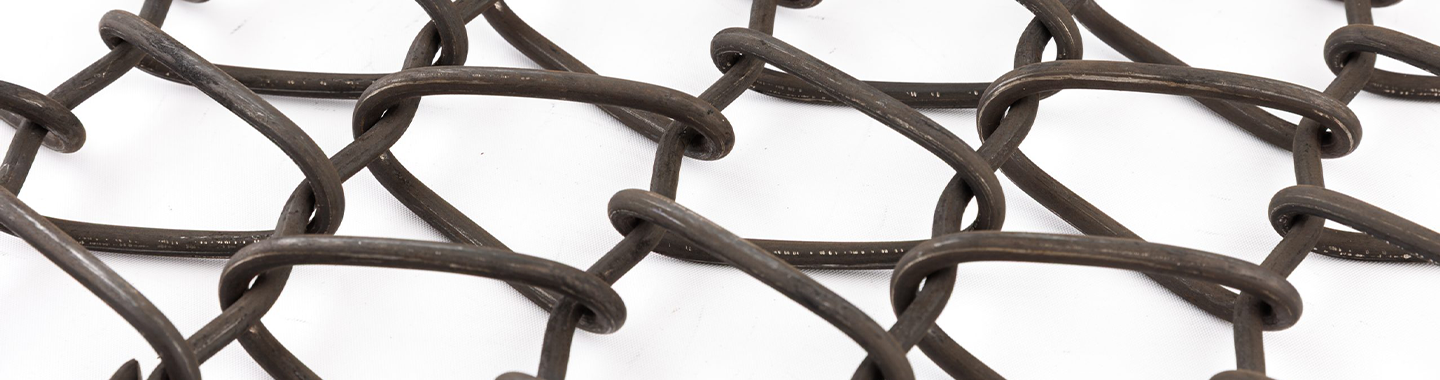
Wire mesh belts deliver dependable conveying in environments that challenge other belt types. Use the Wire Mesh Belt FAQs below to identify the right metal conveyor belt design, capture the information needed for a fast quote and reduce downtime once your belt is in service.
Please be sure to contact us for more details or any additional questions to help ensure you select the right belt for your specific application or replacement.
What information do you need to quote a wire mesh conveyor belt?
To quote a wire mesh belt accurately, we need your belt’s geometry, drive method and operating conditions. This ensures proper fit, tracking and service life in your application.
When replacing an existing belt, it is always helpful to have pictures of the belt, ideally with a tape measure in the foreground, to help verify the correct belt type and specifications.
Please provide the following information detailed information to the greatest extent possible:
- Belt type or weave (balanced weave, flat wire, flat flex, chain edge, etc.)
- Belt width and overall length
- Pitch and mesh opening
- Wire diameter, rod diameter and any reinforcing members
- Edge style (welded, looped, wrapped, side guards, upturned edges)
- Drive method (sprocket driven, chain driven, friction) and sprocket details if applicable
- Product load, part size, belt speed and temperature range
- Any attachments (cleats, flights, side guards, drag-out features)
- Pictures that show all of the above
Which wire mesh belt style is right for my application?
The “right” belt depends on temperature, load, product size, required airflow/drainage and your drive method. We’ll recommend a belt style that matches your process and conveyor design.
Common starting points:
- Balanced weave: straight tracking, general-purpose conveying
- Compound balanced weave (cord weave): tighter openings, flatter surface
- Flat flex: lightweight, high open area for baking and food lines
- Flat wire: open design with a smooth conveying surface
- Ladder link: cooling and transfer in baking applications
- Gratex: added strength and flexibility for high-temperature applications
- Chain drives: positive drive for heavier loads and controlled tracking
What alloys are available for wire mesh belts and how do I choose?
Alloy selection is based on operating temperature, corrosion exposure, atmosphere and required belt strength. Stainless grades are common for many industrial environments while high-alloy, nickel-based materials are used for extreme heat and specific furnace atmospheres.
In practice, buyers typically specify:
- Stainless steel grades for corrosion resistance and washdown environments
- High-alloy or nickel-based alloys for the highest temperatures and demanding thermal cycles
How hot can a wire mesh belt run?
Wire mesh belts can be engineered for elevated temperatures when the weave, wire size and alloy are matched to your furnace or oven conditions. For sintering and brazing, high-temperature belts made from nickel-based alloys can handle temperatures up to 2300°F in various atmospheres.
Please contact our experts to help identify the optimal belt design for your specific environment and application.
Do you manufacture wire mesh belts in custom widths and lengths?
Yes. Wire mesh belts are routinely built to order so they integrate with your conveyor frame, drive and supports. We also support wide-belt applications, including belts manufactured in widths up to 240 inches for specific industrial equipment.
For the fastest turnaround on an engineered quote, submit the closest matching belt specification form and include any constraints like transfer points, side containment and support spacing.
What’s the difference between positive drive and friction drive for metal conveyor belts?
Positive drive uses sprockets or chain drives to pull the belt, reducing slip and improving control under heavy load, or wet or dirty conditions.
Friction drive relies on surface contact with pulleys or rollers. Tension changes, thermal expansion or contamination between the belt and pulley can undermine tracking and eventually damage the belt.
If you need repeatable positioning, reliable tracking or you operate in oily, wet or harsh environments, positive drive is often the preferred starting point.
Can you supply sprockets, chain, connecting rods and other spare parts?
Yes. Many purchasers consolidate belt-related components to simplify maintenance and reduce downtime. We supply spare parts such as connecting rods, chain, attachments, cleats, sprockets and related components used to repair or maintain metal belt lines.
If you are replacing an existing belt, sharing sprocket tooth count, pitch and shaft details helps ensure a compatible drive interface.
What do you offer for belt repair and installation support services?
Our experienced staff can provide remote support by phone to assist with common repair and installation issues. We also supply spare rods and other components, and manufacture partial length belt sections to splice in, to support in-house repairs. We can also help refer you to our network of fabricators and distributors to provide local onsite support where applicable.
Where economically feasible, we can provide belt repair services for or rebuild any belt manufactured by us at our factory in Brampton, Ontario. This includes arranging transport and custom clearance to help make the process seamless and painless.
When requesting service, including photos of the belt edge, splice area and any tracking wear or damage allows us to better recommend corrective actions.
How do I reduce tracking problems and premature wear on a wire mesh belt?
Most tracking and wear issues trace back to alignment, support conditions and drive interface mismatch. A belt that is correct on paper can still wear early if sprockets, supports or tensioning are not set for the belt style.
Best practices to review:
- Confirm sprocket alignment and shaft squareness across the conveyor width
- Verify support spacing and wear strip condition for your belt type
- Use the correct belt edge design for side loads or containment (side guards, upturned edges)
- Measure pitch, wire diameters and belt geometry correctly before ordering a replacement
If you are troubleshooting an existing belt, we can help you translate field measurements into a spec that runs correctly in your current conveyor.
Can you build custom conveyors or components around my wire mesh belt?
Yes. In addition to metal conveyor belting, we design and fabricate custom conveyors, shafts, sprockets and pulleys in the alloys required for your application. This is useful when you are upgrading a line, correcting chronic tracking issues or replacing an obsolete conveyor section.
Have any questions you don’t see answered above? Reach out to us today!